
Visiting Space Center Houston: Tips for Planning Your Day
A visit to Space Center Houston is more than a day of exploring space exhibits. It is an opportunity to step into America’s space exploration history, learn about future missions, and experience a little of what it takes to get humans beyond Earth. For my dad, it was also another item to check off his bucket list.
My dad has always been fascinated by flight and space exploration. As an engineer and Air Force veteran, he enjoys visiting museums and attractions that celebrate aviation and our accomplishments in space. We have taken him to the National Museum of the United States Air Force in Ohio, the Air Force Academy in Colorado Springs, and the Pima Air & Space Museum in Tucson.
But visiting NASA’s Space Center Houston was something special.
We grew up watching the Apollo rocket launches and moon landings on our family’s console television. Seeing the historic Apollo Mission Control room in-person brought back those memories and gave us an opportunity to experience a piece of history together.
If you are planning a visit to Space Center Houston, here are some tips and highlights from our day to help you make the most of your experience.
Disclosure: Some of the links below are affiliate links. If you make a purchase using one of the links, we may earn a commission, at no additional cost to you. Please see our Disclaimer for additional information.
Planning Your Visit to Space Center Houston
Space Center Houston is the official visitor center for NASA’s Johnson Space Center. The attraction covers a lot of ground, and there is more to see than you might expect. Planning ahead is important if you want to experience the highlights in one day.
We visited on a Thursday in mid-October. Weekdays are generally a good choice if you want to avoid some of the weekend crowds. Although several school groups were visiting, during our trip, we did not encounter them at the exhibits or tours we attended.
Tickets and Reservations
We purchased our general admission tickets online, in advance, and selected a 10 a.m. arrival time. We also purchased separate tickets for the Historic Mission Control Tram Tour, which departed at 11:20 a.m.
Several other tram tours are included with general admission, including the NASA Campus Tour, Astronaut Training Facility Tour, and access to Rocket Park.
Important tip: As soon as you enter the main building, go to Guest Services to obtain timed tickets for the included tram tours. These tours have scheduled departures, and availability can affect how you organize your day.
We obtained a 2 p.m. reservation for the Astronaut Training Facility Tour. Having our two priority tours scheduled in advance gave us a framework for exploring the other exhibits.
Space Center Houston is generally open daily from 10 a.m. to 5 p.m. on weekdays and 10 a.m. to 6 p.m. on weekends. But check the official website for current operating hours, admission prices, and tour availability before your visit.
Parking and Arrival
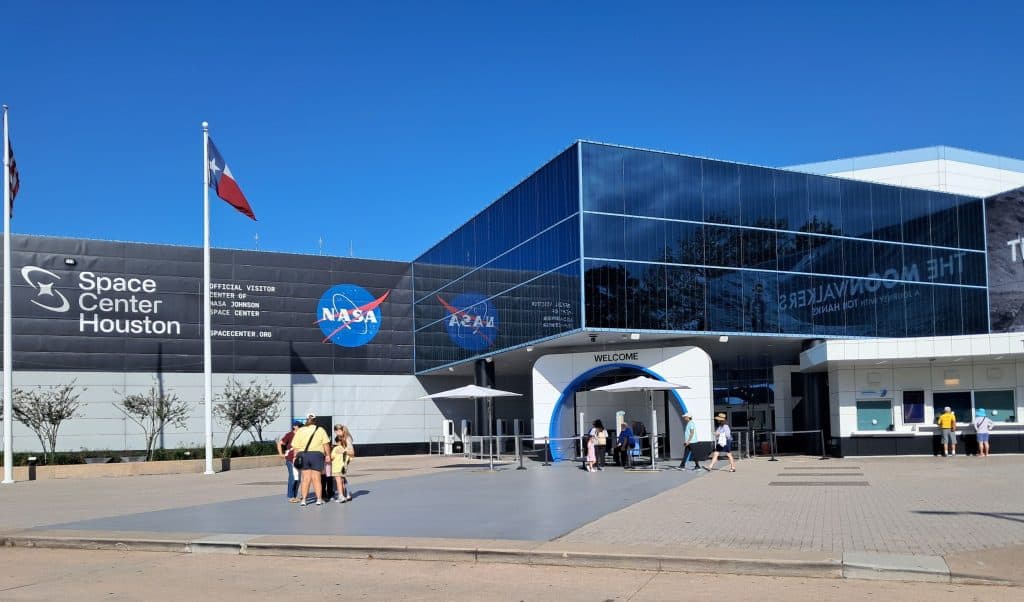
Parking was easy to find, with large parking areas near the main entrance. We paid $10.99 for parking, which could be paid using a QR code posted around the parking lot, or at Guest Services inside the building.
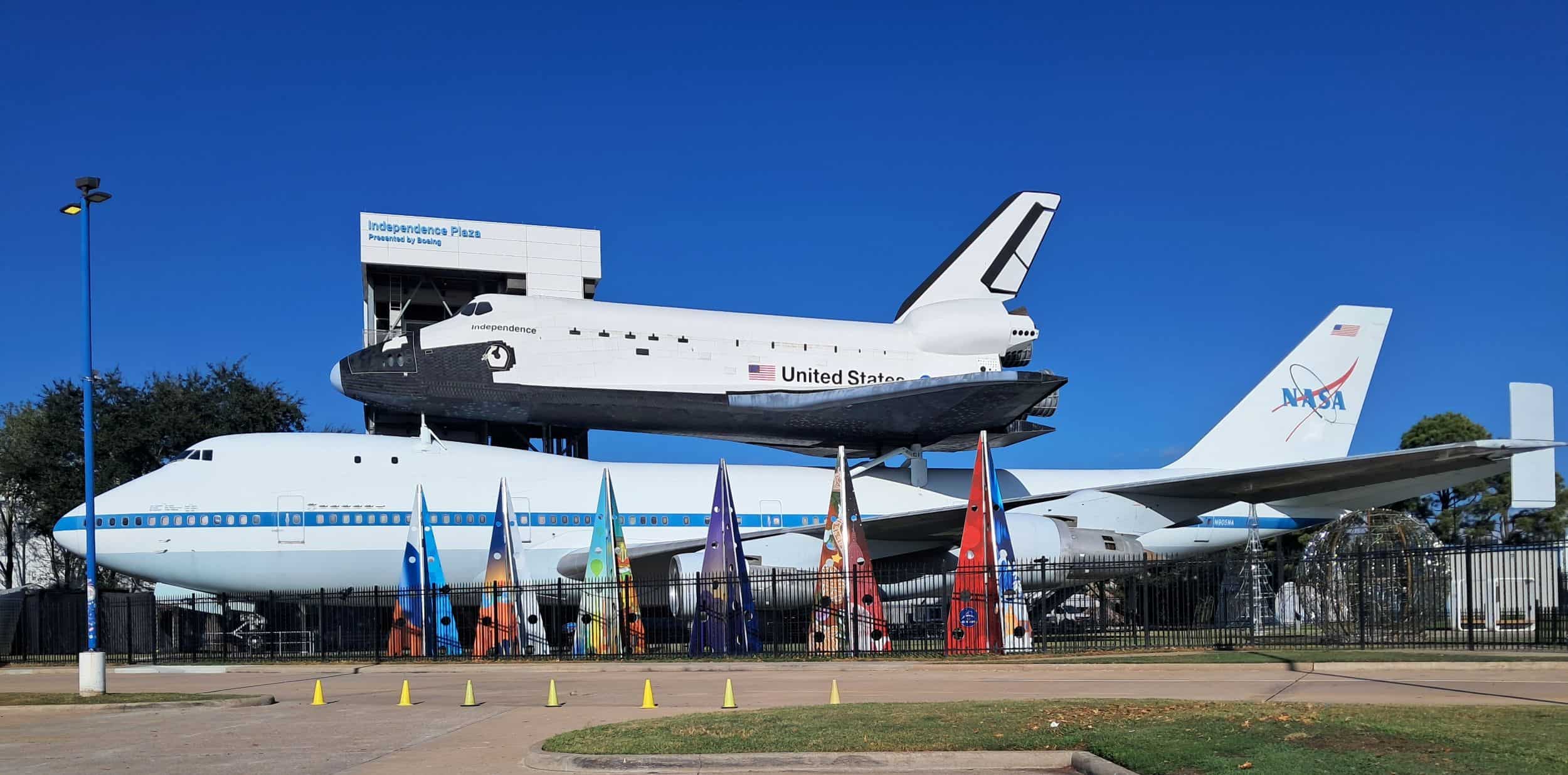
We arrived at approximately 9:35 a.m. and were able to park close to the entrance. The first thing you notice is the massive shuttle replica, Independence, sitting on top of NASA’s Shuttle Carrier (Boeing 747) Aircraft. It is quite a sight and a great photo opportunity!
The center also offers wheelchair rentals for $10 per day. We rented one for my dad, and the staff brought it to us.
We joined the entrance line at 9:50 a.m. and went through security when the doors opened at 10 a.m.
After security, you have the opportunity to take photographs with several NASA-themed backgrounds. We purchased three 6-by-8 prints for $35, and the purchase also included access to digital photos and a short video reel. It made a nice keepsake from our visit.
The Historic Apollo Mission Control Tour: A Step Back in Time
This was the highlight of our visit and the primary reason we wanted to come to Space Center Houston.
We arrived at the tram boarding area about 15 minutes before our scheduled departure. The boarding locations are clearly marked inside the main building, and there are restrooms nearby.
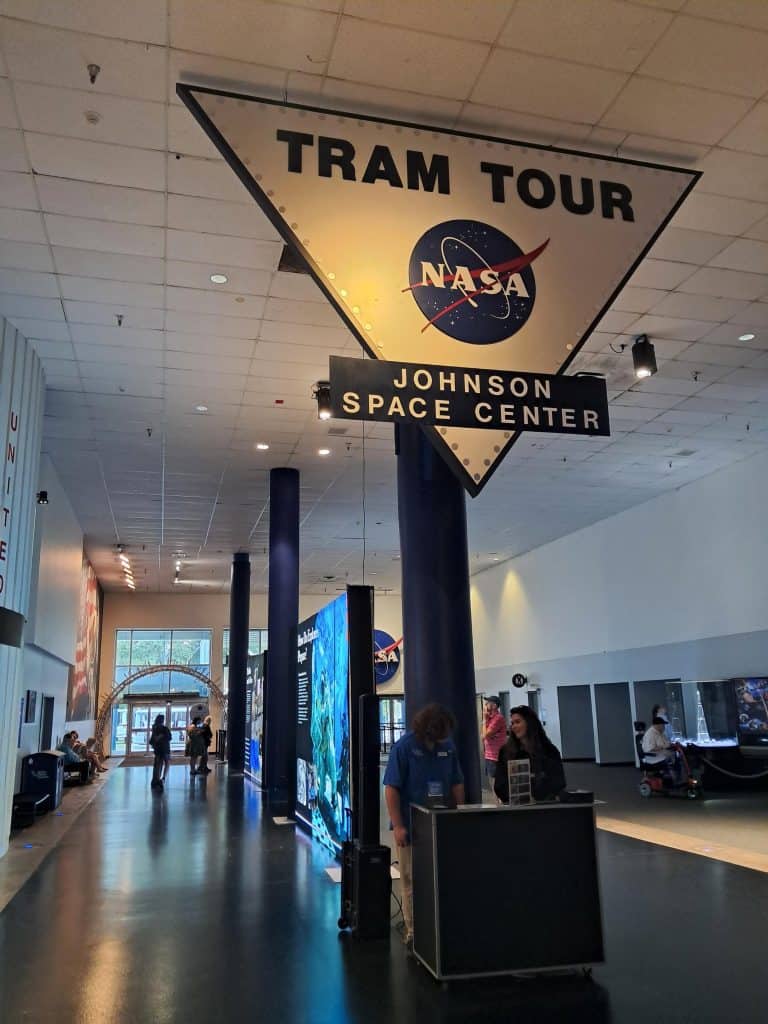
The staff was very accommodating with my dad’s wheelchair. The first tram car has a ramp, and employees secured his wheelchair for the ride. We were able to sit directly behind him.
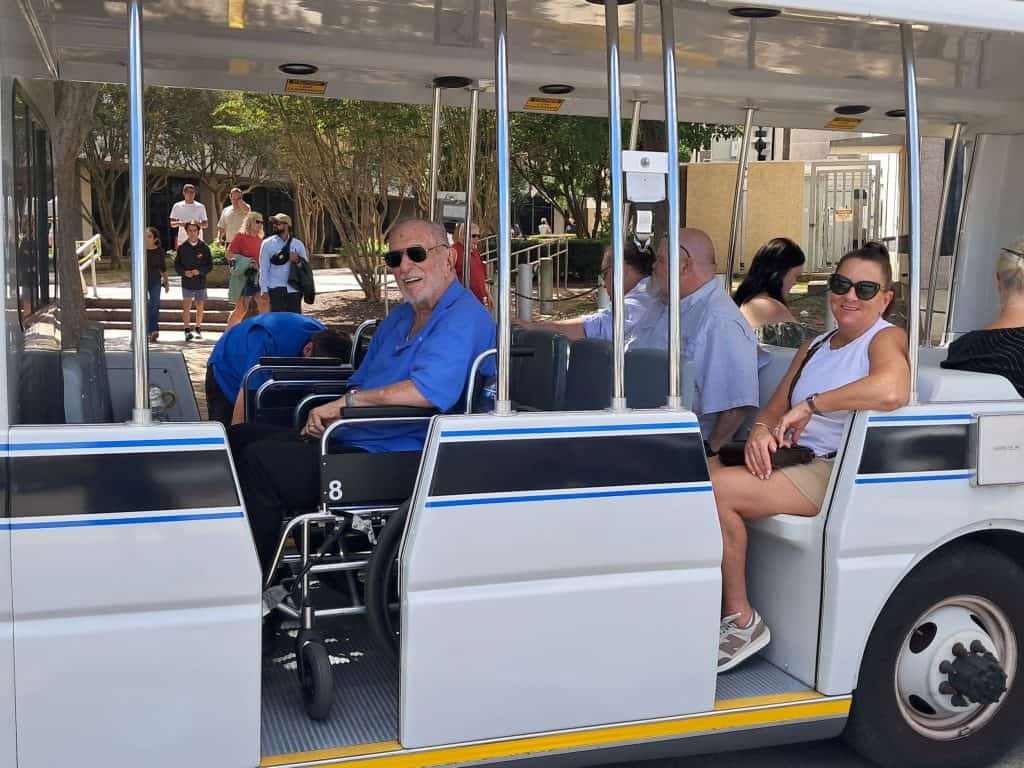
The tram ride and visit took approximately 75 minutes.
The Historic Mission Control Tour takes you to the Mission Operations Control Room (MOCR-2), located inside the Christopher C. Kraft, Jr. Mission Control Center.
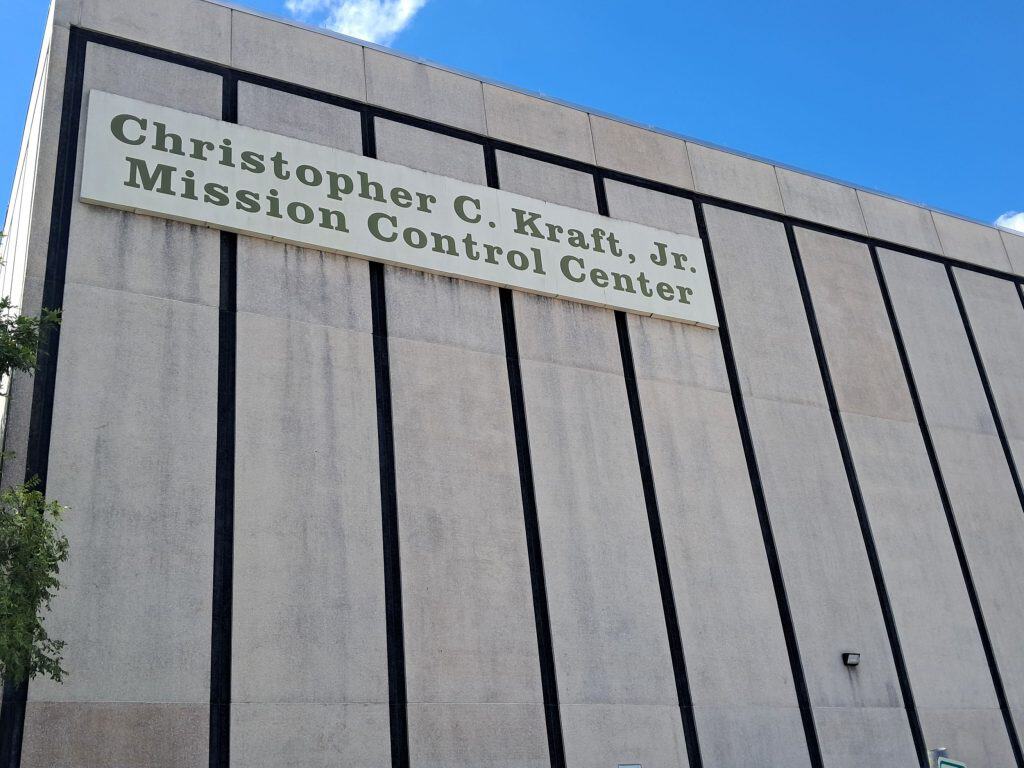
This is where NASA flight controllers monitored some of America’s most important space missions, including the Apollo program.
Before entering the viewing area, you can read displays featuring memorable statements from the Apollo missions. One that immediately catches your attention is astronaut James A. Lovell’s famous message from Apollo 13: “Houston, we’ve had a problem.”
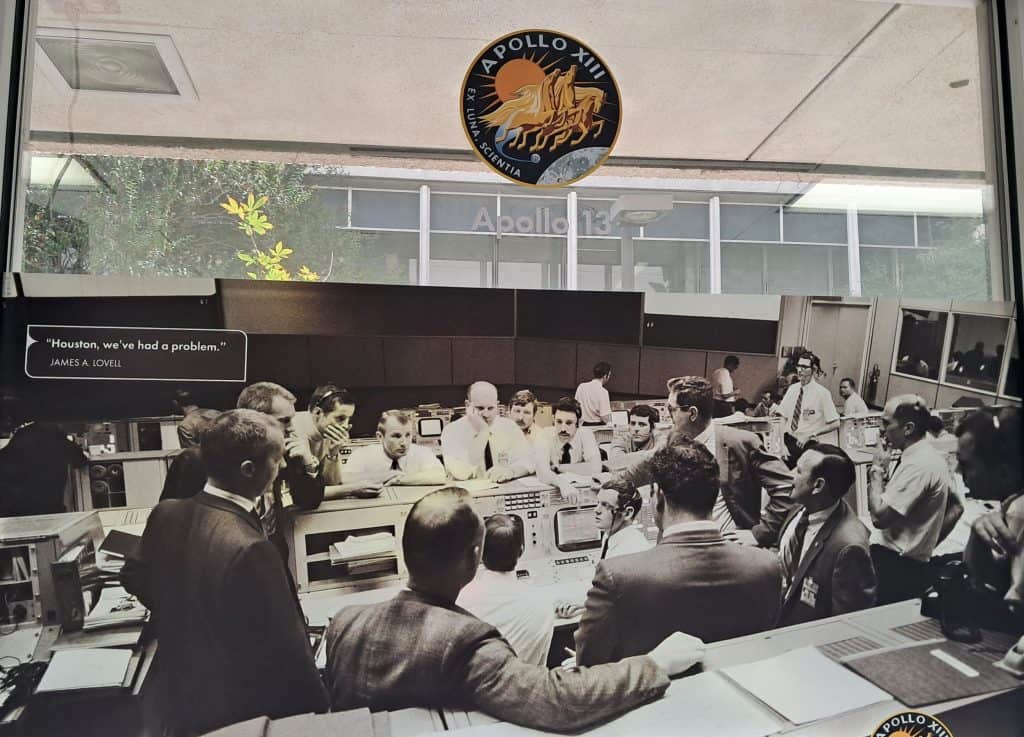
You then make your way upstairs to the historic control room. There are 87 steps to climb, but an elevator is available for visitors who cannot manage the stairs.
Entering Mission Control
Looking into MOCR-2 was a nostalgic experience. It was just as we remembered it from watching the Apollo missions on television during the 1960s and 1970s.
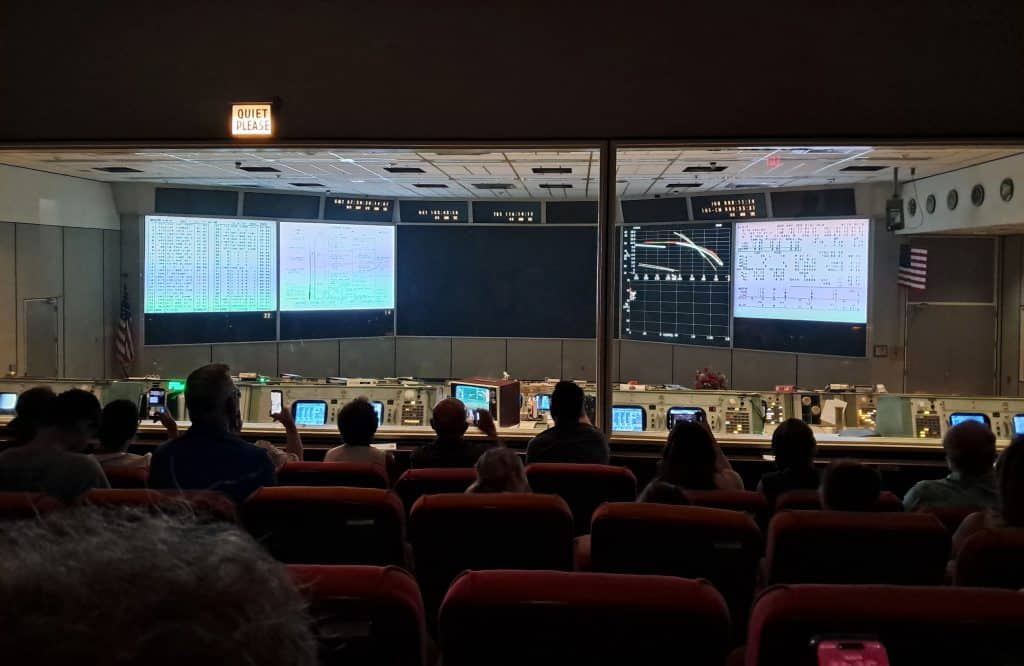
The original consoles, seating arrangements, and even the cigarette butts left in the ashtrays help preserve the atmosphere of that era. It is fascinating to think about how much responsibility rested on the engineers and flight controllers working behind those consoles.
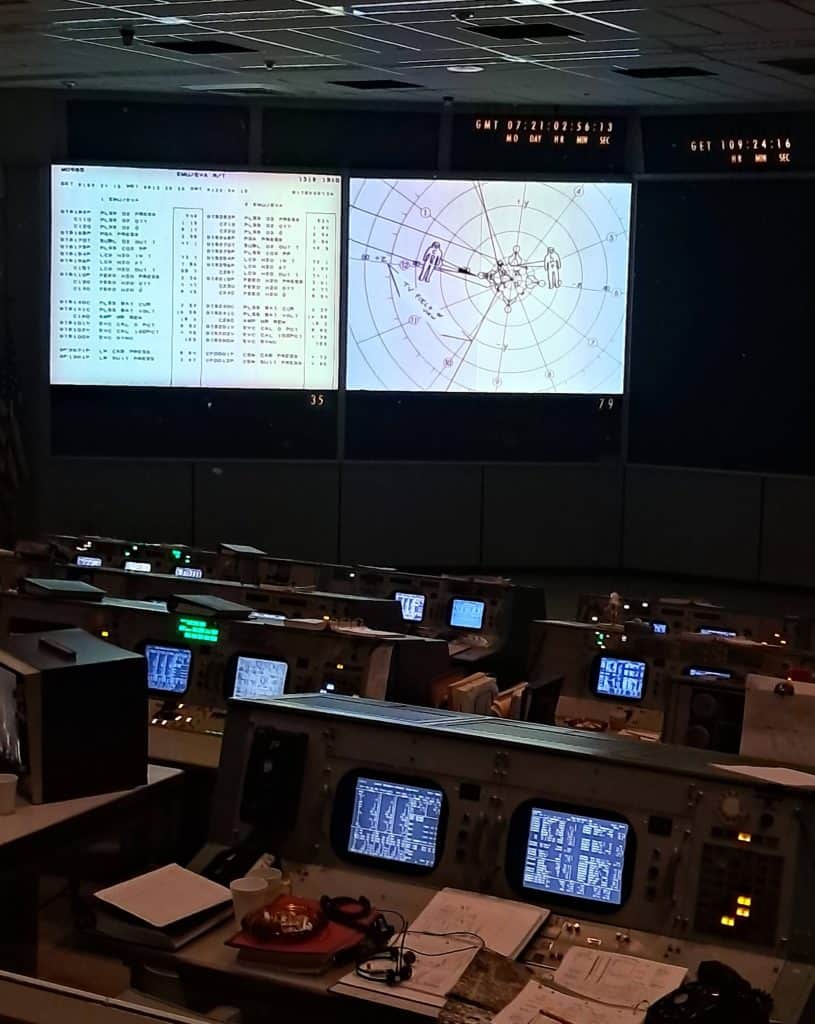
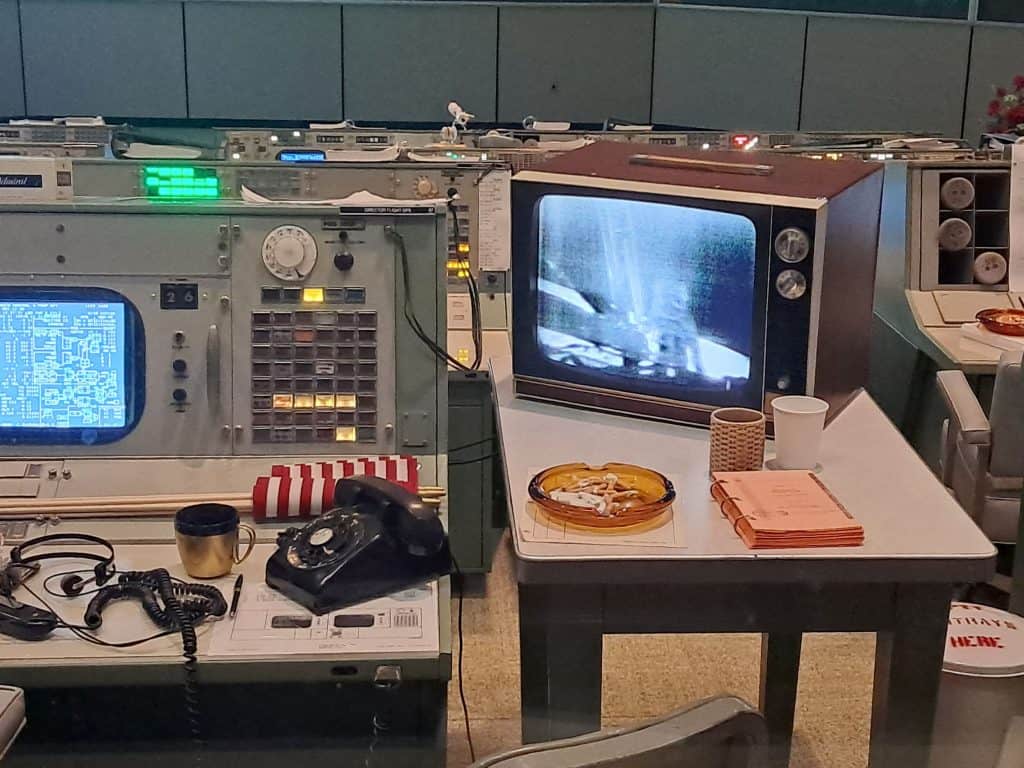
The presentation focuses on the Apollo 11 moon landing and walk in July, 1969. Videos and display boards help explain what happened during the mission.
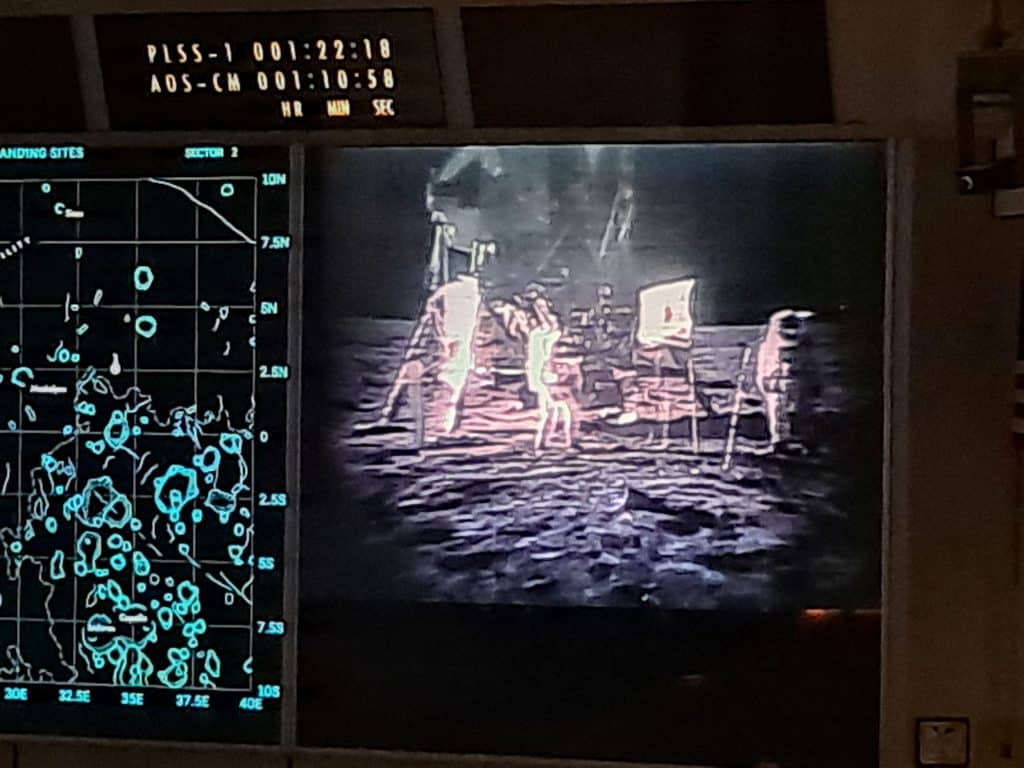
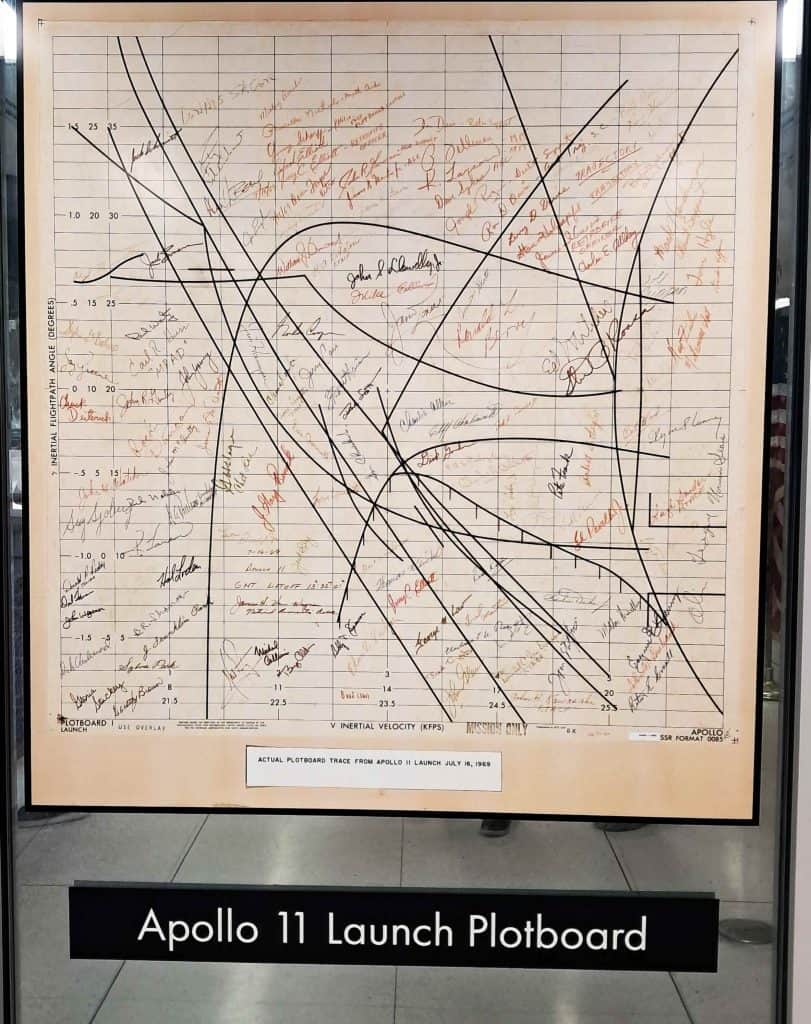
We spent approximately 45 minutes in the viewing area and took plenty of photographs.
My dad loved every minute of it. He remembered the details of that historic July day, and seeing the room in person brought those memories back.
One thing that really struck me was the contrast between the historic room and today’s space program. NASA’s current Mission Control operations continue to support the International Space Station and the Artemis missions in the same building, on different floors.
My recommendation: If you are interested in the Apollo program or the history of space exploration, I would make this tour a priority. Purchase your tickets in advance and plan your other activities around the scheduled departure.
Exploring the Exhibits at Space Center Houston
There is much more to Space Center Houston than Mission Control. The main building has several galleries featuring spacecraft, artifacts, and displays about past and future space missions.
Here are some of the highlights we enjoyed.
Starship Gallery
The Starship Gallery features an impressive collection of spacecraft and space exploration artifacts.
We enjoyed walking through the Skylab Trainer. My dad particularly enjoyed seeing the Apollo 17 Command Module and the John F. Kennedy lectern, at which he proclaimed the challenge for the U.S. Space Agency to put a man on the moon.
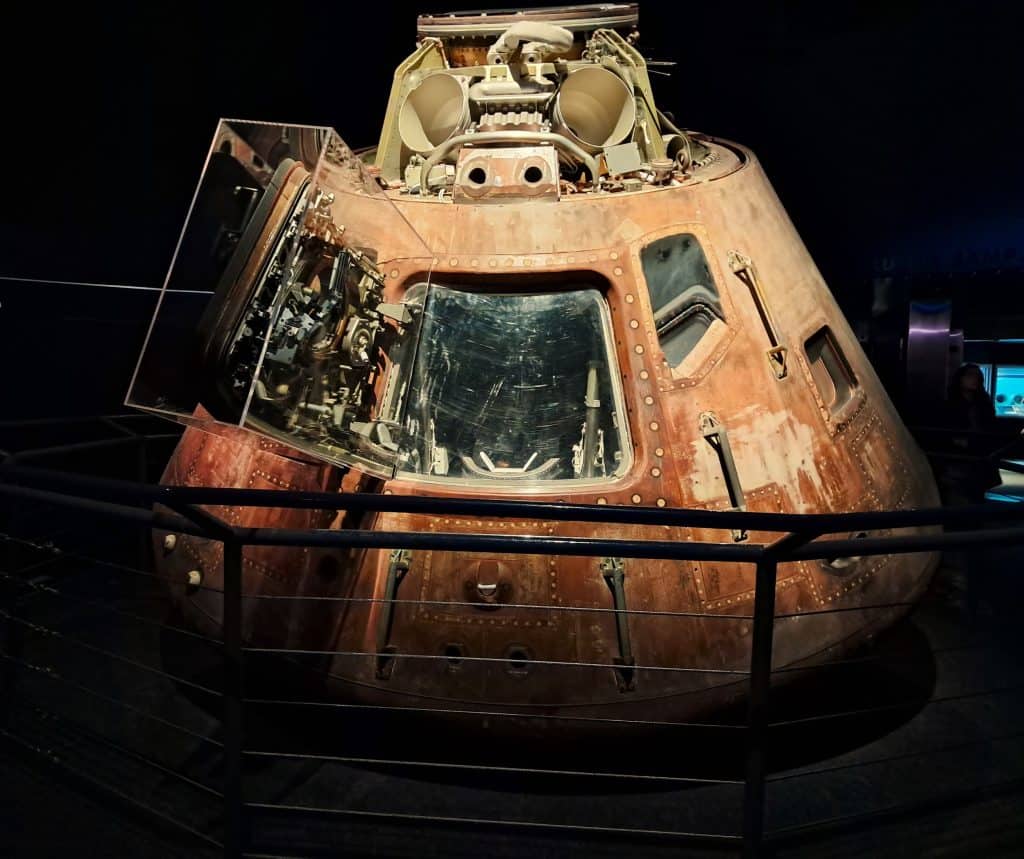
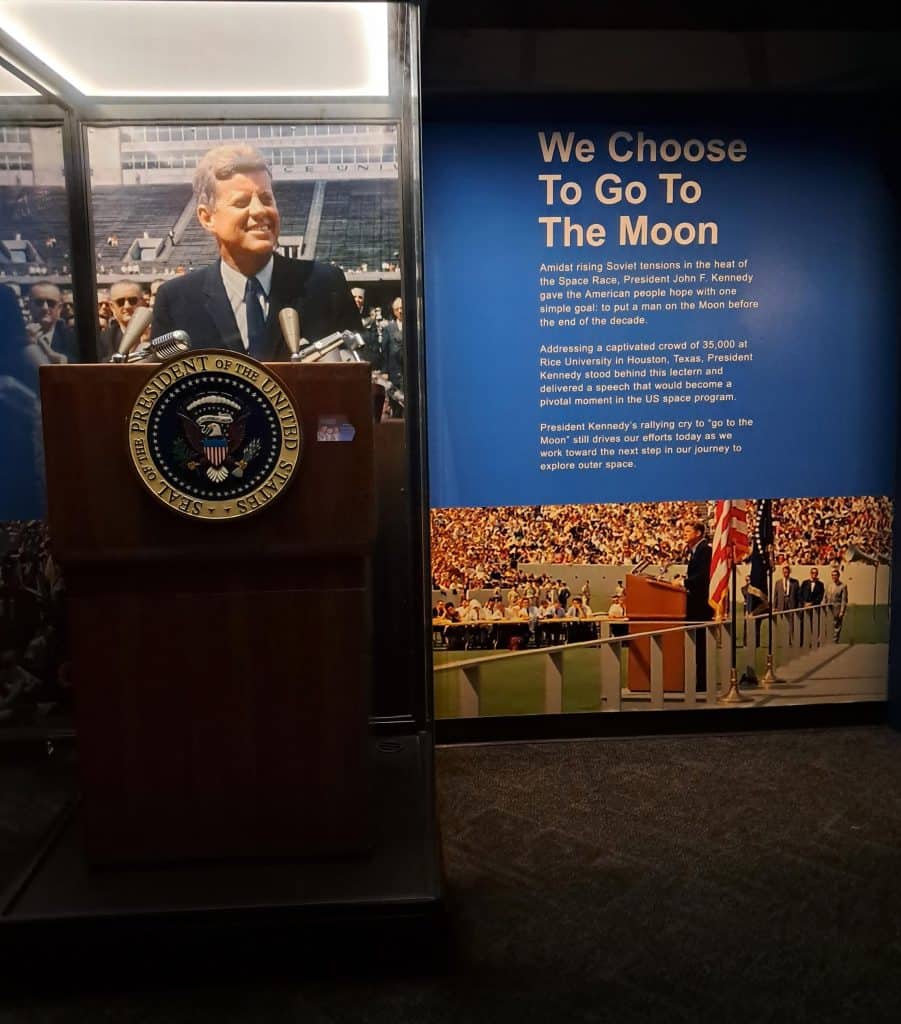
The exhibits are well presented, with information that is easy to read and understand. There is also a Destiny Theater, which offers a short film, but we ran out of time to see it.
International Space Station Gallery
This was one of the first exhibits we explored after entering the main building.
The exhibits explain life aboard the International Space Station and what it takes to become an astronaut. We also attended a 20-minute presentation about the astronaut selection process.
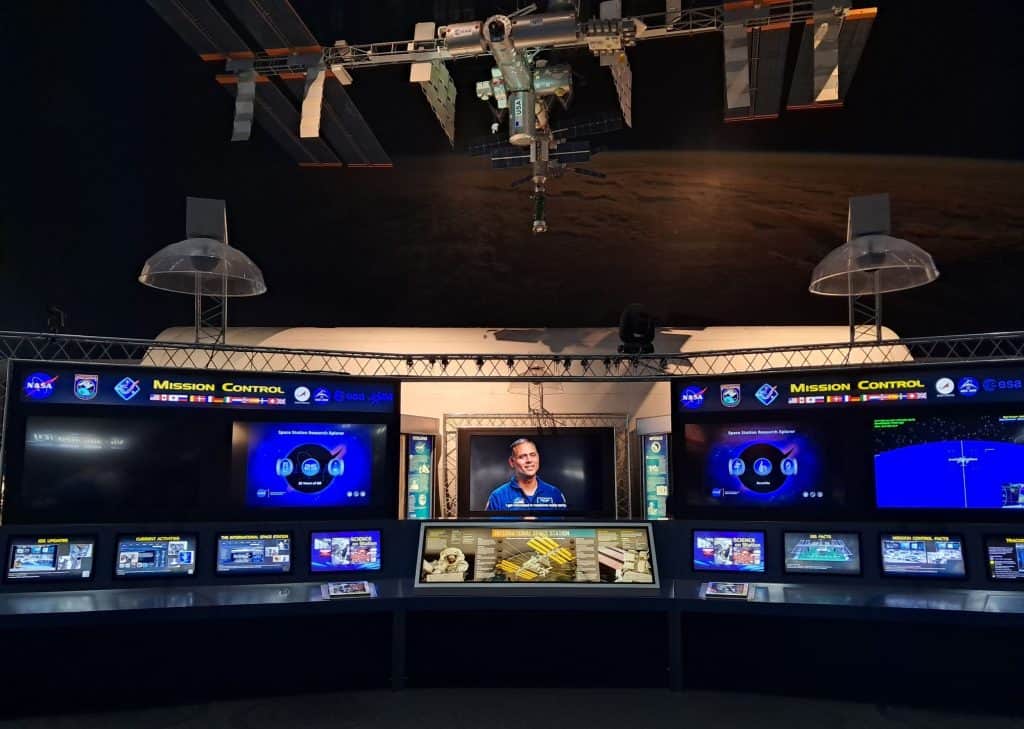
There is a wall displaying photographs of the crews, along with information about their missions. It provides an interesting look at the people behind space exploration.
Artemis and Mission Mars
The Artemis exhibits focus on NASA’s plans to return humans to the Moon. We learned that Artemis was the twin sister of Apollo in Greek mythology, making the connection between the two programs particularly fitting.
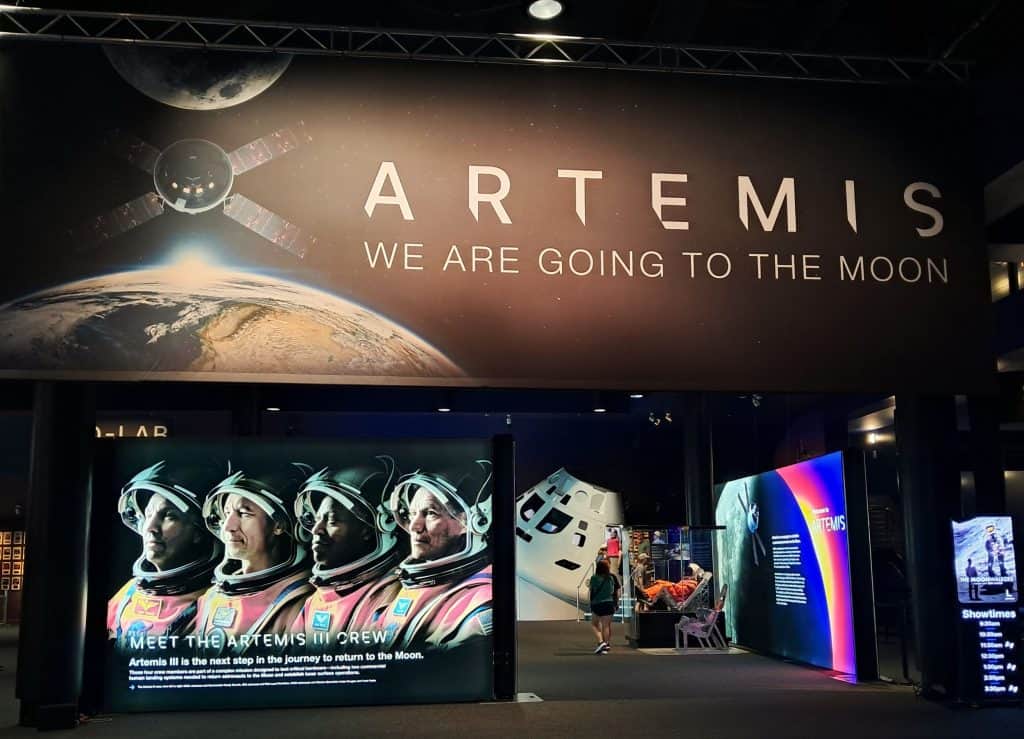
The displays explain how NASA is developing the technology and equipment needed for future lunar exploration, with the longer-term goal of sending humans to Mars.
It is exciting to see how the space program continues to evolve and what the next generation of space exploration may bring.
Independence Plaza
Remember the shuttle replica and aircraft you saw when arriving? This is your opportunity to explore them up close.
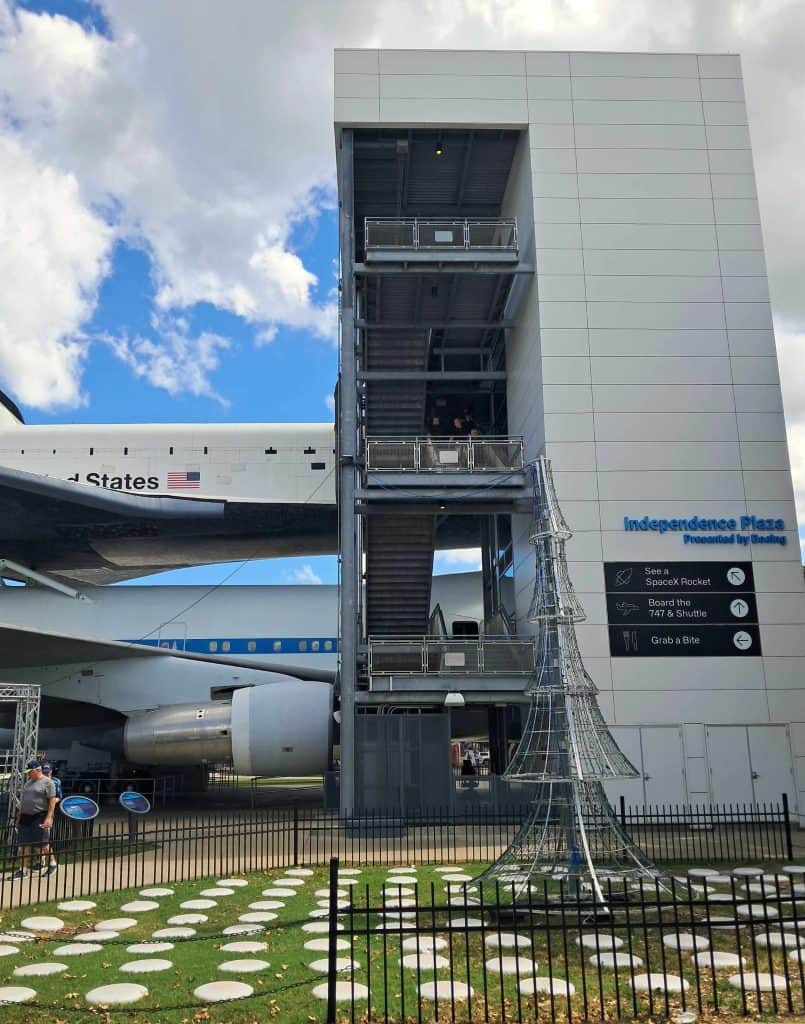
Independence Plaza features the shuttle replica Independence mounted on top of NASA’s Shuttle Carrier (Boeing 747) Aircraft, NASA 905.
You can explore several levels of the shuttle and walk through the carrier aircraft. There is a considerable amount of information to read, so allow time to enjoy the displays.
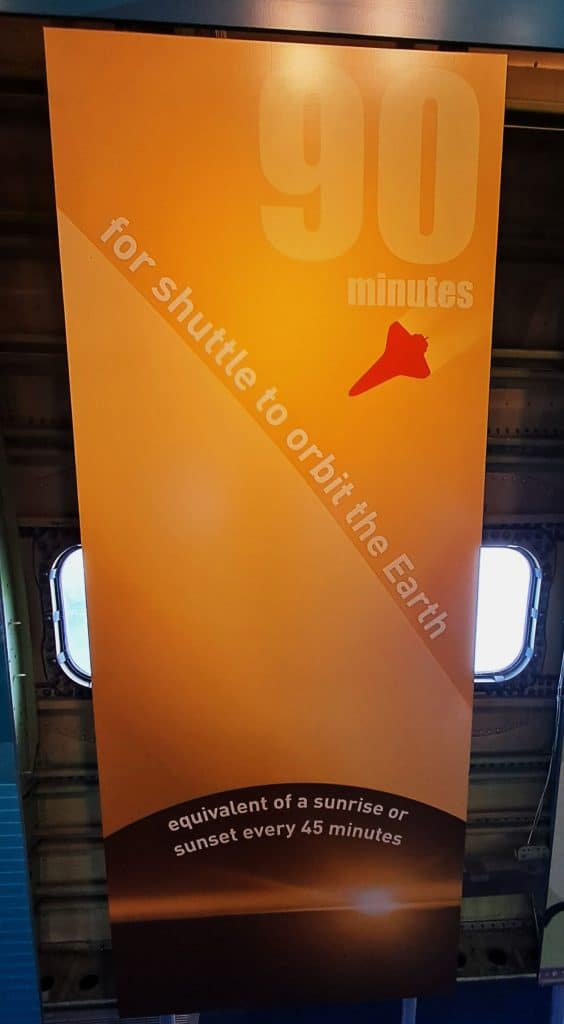
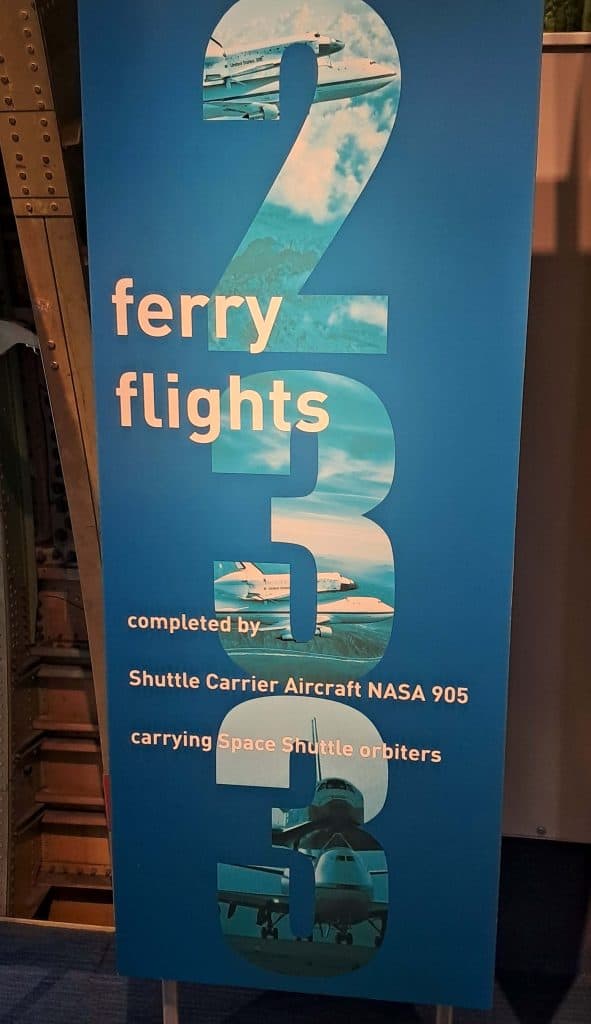
We spent approximately 35 minutes here. Elevators are available, making both exhibits accessible to visitors using wheelchairs.
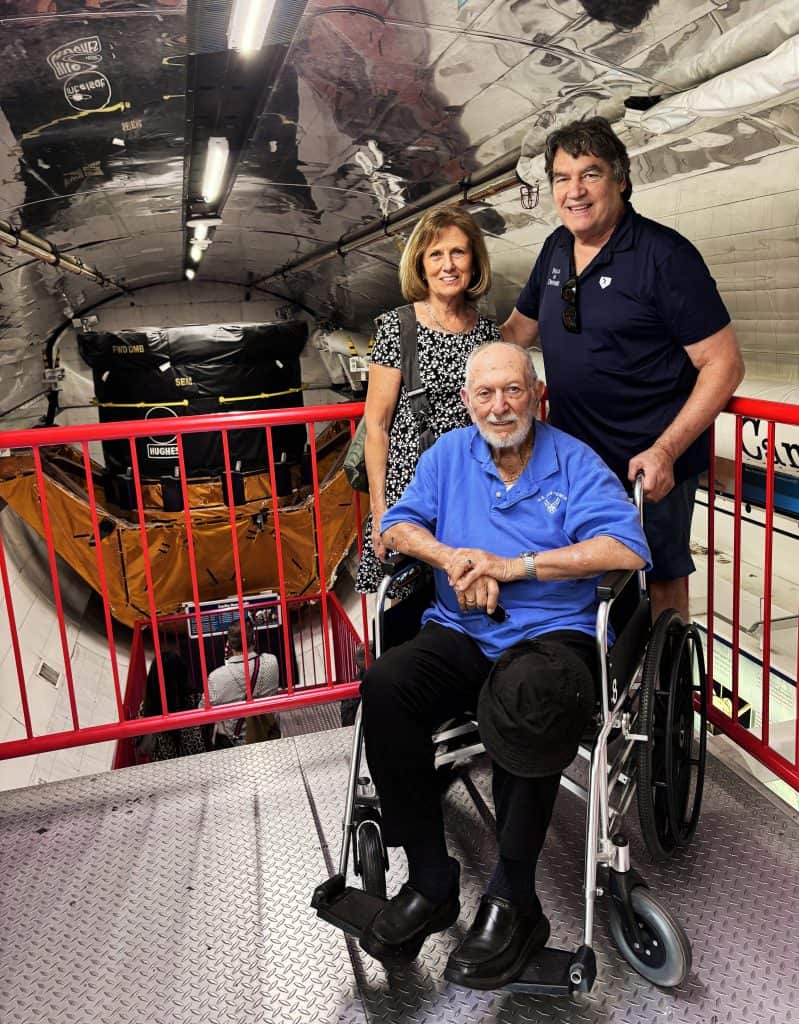
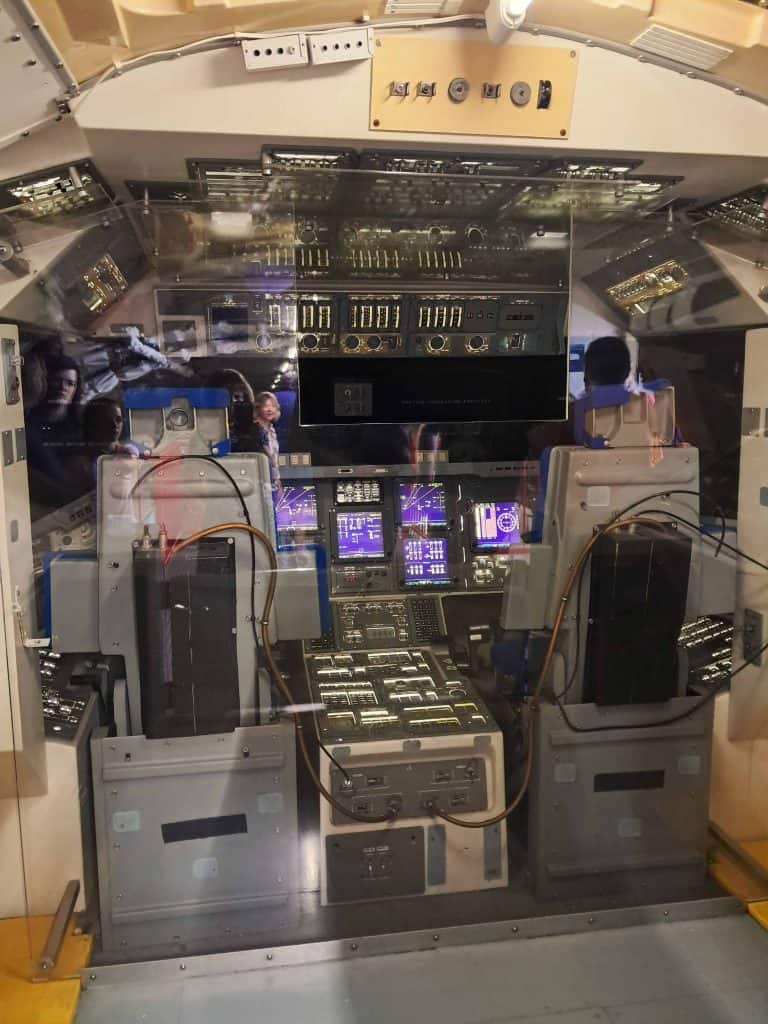
If you have additional time, you can also walk over to see the Falcon 9 rocket exhibit.
NASA Tram Tours
When you arrive at the Space Center, go to Guest Services to obtain timed tickets for the following tram tours that are included in the General Admission.
Rocket Park and the Saturn V
Although we did not have time to visit Rocket Park during our trip, we want to give you a better idea of what you can expect.
The Saturn V rocket that was scheduled to be used in the Apollo 18 and 19 missions (that were cancelled) is in an enclosed building and is displayed horizontally, allowing you to walk alongside its entire length. This gives you an opportunity to appreciate just how enormous these rockets really are.
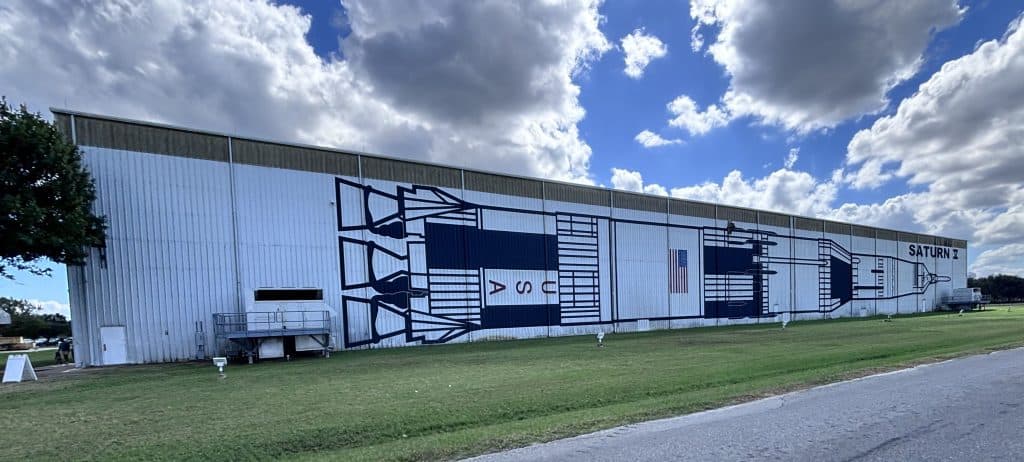
We were fortunate to have previously seen a Saturn V at the U.S. Space & Rocket Center in Huntsville, Alabama. That experience included a docent-led tour that allowed us to walk underneath the rocket. It is an impressive sight and well worth visiting if you have the opportunity.
Astronaut Training Facility
Our second scheduled tram tour departed at 2 p.m. and took us to the Astronaut Training Facility.
The tour gives you a look at where NASA works on developing equipment, improving spacesuits, and designing vehicles for future missions.
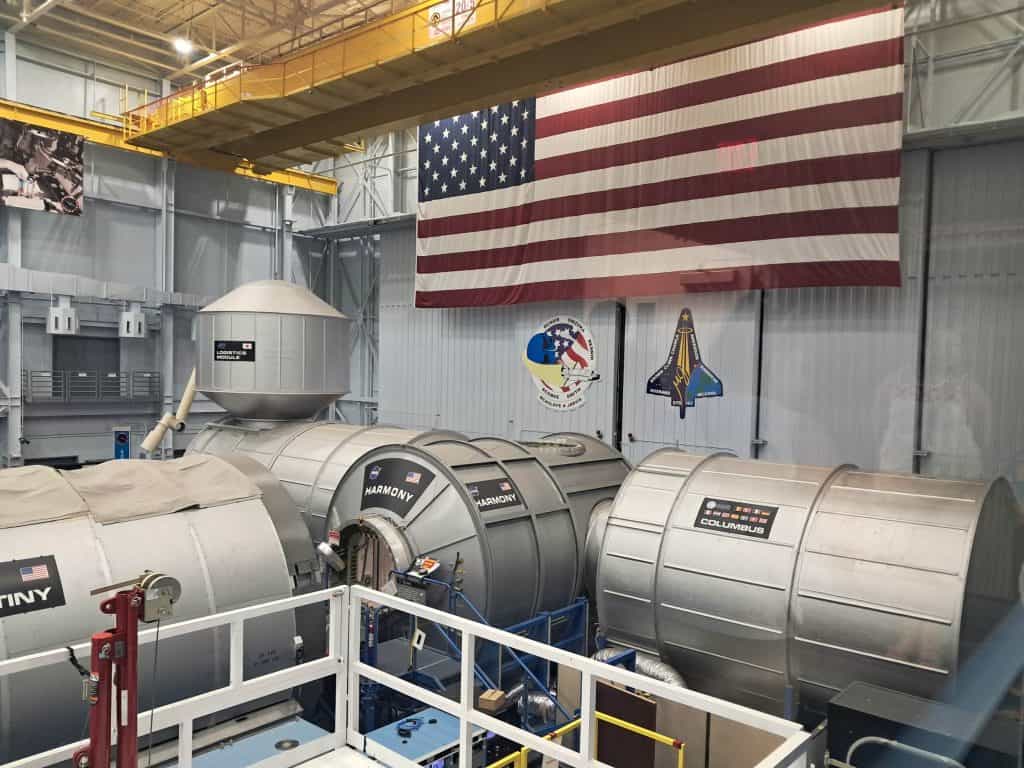
After arriving, we climbed stairs and walked along a long corridor overlooking the training facility. An elevator is available for visitors with mobility challenges.
We could see some activity on the floor during our visit, but we did not see any astronauts training. There is quite a bit to observe, and the guide keeps the group moving along the corridor. The entire experience, including the tram ride, took approximately 45 minutes.
It was interesting to see where some of the work behind future space missions takes place.
NASA Campus Tour
This is a tram tour around the NASA Space Center campus. The center encompasses 1,600 acres and employs 8,000 employees.
We did not take this tour but it is advertised to visit iconic landmarks around the campus. The tour lasts 35 minutes.
Don’t Miss the Daily Presentations and Films
One thing we would recommend is to check the daily presentation schedule when you arrive.
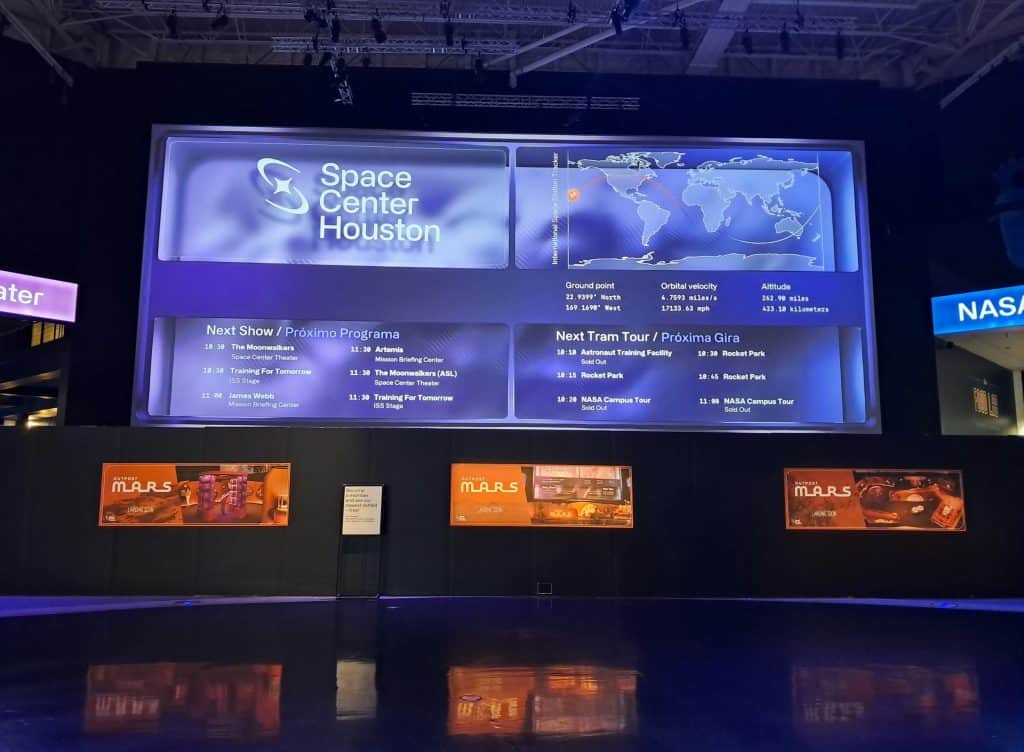
Space Center Houston offers several films and presentations throughout the day. These can easily be overlooked when you are busy exploring the exhibits and trying to make your scheduled tram tours.
We particularly wanted to see The Moonwalkers: A Journey with Tom Hanks, so we planned our afternoon around the 3:30 p.m. showing. The presentation lasts approximately 50 minutes and was an interesting way to finish our day.
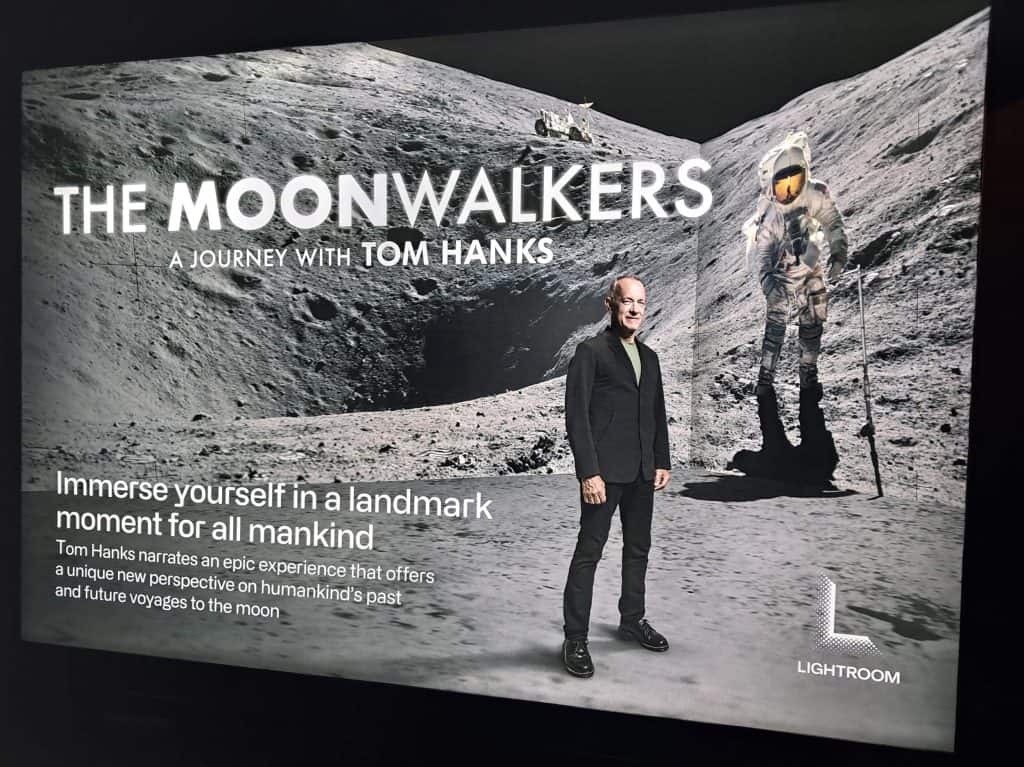
The theater has elevators for visitors who need them, and the last row is designated for wheelchair seating.
Other options include the Mission Briefing Center and Destiny Theater, which offer shorter films. Unfortunately, we ran out of time to see those.
Families visiting with younger children will also find activities such as Mission Sketch and Science Desk.
Before leaving, allow a little time to visit the Space Center Houston gift shop. We found a few souvenirs to bring home.
Food and Dining at Space Center Houston
You will probably want to take a break during your visit, especially if you plan to spend the entire day exploring.
The Food Lab has several food stations offering different types of meals. Ordering is done through kiosks, and when your food is ready, your order number appears on a display board at the appropriate station.
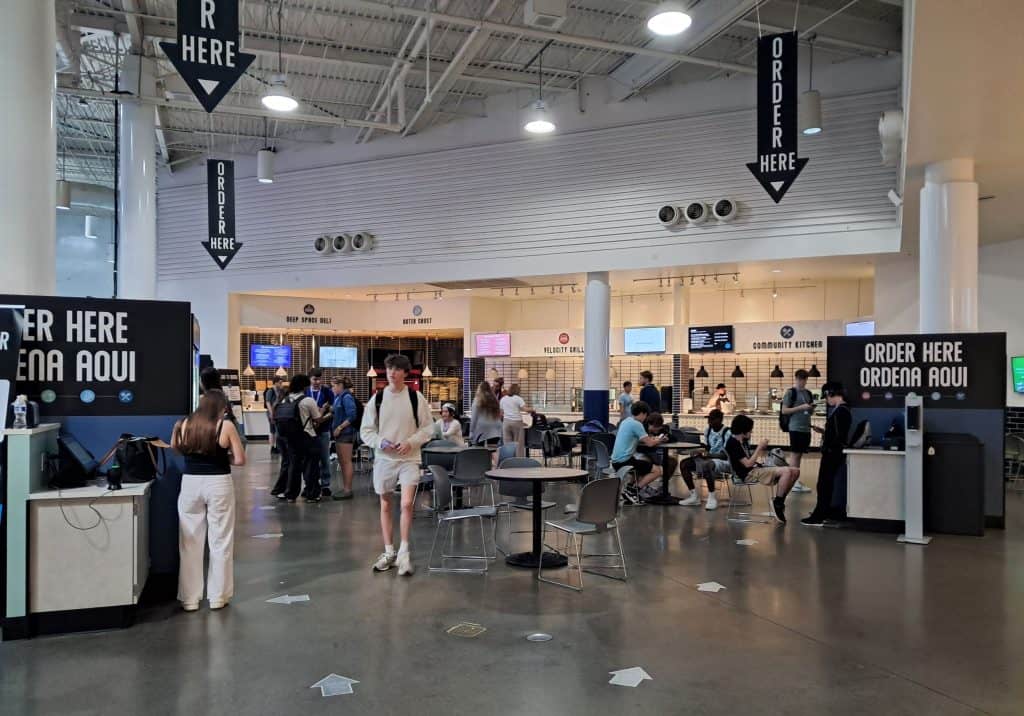
There is also a coffee station, an ice cream stand, and a small market selling prepackaged food.
We found plenty of indoor and outdoor seating. It was a convenient place to relax after our Mission Control tour and before heading out on our next tram tour.
Accessibility and Tips for Older Visitors
One of the things that impressed me most about Space Center Houston was how accommodating the facility was for visitors with mobility challenges.
My dad uses a wheelchair for longer outings, and we had no difficulty navigating the exhibits and attractions.
Here are a few things worth knowing:
- Wheelchairs are available for rent at the entrance for $10 per day.
- The tram tours have ramps and designated space for wheelchairs.
- Elevators are available at the Historic Mission Control tour, Astronaut Training Facility, Independence Plaza, and theater.
- Restrooms are conveniently located throughout the facility.
- There are a few places to sit and rest, but expect to do quite a bit of walking.
- The staff are helpful and accommodating throughout our visit.
I would encourage anyone traveling with an older family member or someone with limited mobility to consider renting a wheelchair if walking long distances is a concern.
Comfortable shoes are also important. You will spend time walking through the exhibits and outdoors at several attractions. We visited in mid-October, when temperatures were in the lower to mid-80s with sunshine and low humidity. Remember to dress appropriately for the weather.
Where to Stay Near Space Center Houston
We stayed at the Hampton Inn Houston NASA-Johnson Space Center in Seabrook, Texas.

The hotel is approximately four miles from Space Center Houston, making it a convenient choice if you want to arrive early and spend the entire day exploring.
Our room was comfortable, parking was free, and breakfast was included. Coffee and tea were available throughout the day, and there was a small sundry shop for snacks and cold drinks. The hotel also had several handicap parking spaces near the entrance.
We were happy with our choice and would recommend the hotel to anyone planning a visit to NASA.
We flew into George Bush Intercontinental Airport and rented a minivan. Depending on traffic, the drive to the hotel and Space Center area takes approximately 45 minutes to an hour.
If you are traveling with someone who needs assistance at the airport, I would also recommend arranging wheelchair assistance through your airline in advance. Our experience at Houston was very smooth, including assistance between the rental car shuttle and the rental car center.
Hotel Recommendations
If you are looking for other accommodations near Space Center Houston, the nearby communities of Webster and Nassau Bay offer several choices. You will find familiar hotel brands, extended-stay properties, and accommodations convenient to both NASA and Kemah Boardwalk. Here are a few options to consider when planning your visit.
1. Hampton Inn Houston NASA-Johnson Space Center – Our experience: convenient location, free parking, breakfast, and a comfortable stay. Approximately four miles from the Space Center.
2. Courtyard by Marriott Houston NASA/Clear Lake – Located in Nassau Bay, close to the Space Center. A good alternative if you are a Marriott traveler.
3. Staybridge Suites Houston-NASA/Clear Lake – All-suite accommodations, worth considering for families or if you are planning a longer stay.
4. SpringHill Suites Houston NASA/Webster – Another suite-style option in Webster, convenient for the Space Center and Kemah area.
5. Hilton Garden Inn Houston/Clear Lake NASA – A convenient option if you prefer a traditional full-service hotel.
🎈 Book your accommodations now. Check out more options here!
Dining Near Space Center Houston and Kemah Boardwalk
The area around Webster and Clear Lake has plenty of dining options, from casual seafood restaurants and pizza to more upscale establishments.
The Kemah Boardwalk is approximately a 10- to 15-minute drive from our hotel. It is a fun waterfront destination with restaurants and family activities. We did not have time to explore the boardwalk during this trip, but it is worth considering if you have an extra evening.
We enjoyed dinner at Opus Ocean Grill, located in a marina on Clear Lake near Kemah. It was a nice choice for the evening before our visit to NASA.
Another convenient option is Sam’s Sunset Kitchen, a seafood restaurant and bar across the street from our hotel. We drove over because of my dad’s mobility needs. The restaurant has indoor and outdoor seating, good views of the lake, and reasonably priced food.
After a full day exploring NASA, we were ready for a relaxing dinner and an early evening!
Final Thoughts: Is Space Center Houston Worth Visiting?
Absolutely! Space Center Houston offers an opportunity to explore the history of America’s space program while learning about the technology and missions that will shape future space exploration.
You can easily spend an entire day here, and there is still more to see. We would have enjoyed another day to visit Rocket Park and watch the additional films and presentations.
If you only have one day, we recommend arriving when the center opens, purchasing your Historic Mission Control tour tickets in advance, and reserving your included tram tours as soon as you arrive. Check the presentation schedule and plan your day around the activities that interest you most.
The experience is especially worthwhile for children interested in science and space, but do not overlook it as an attraction for adults. The history, exhibits, and opportunity to see where some of our most important space missions were managed make it interesting for multiple generations.
For us, the visit was about more than seeing the exhibits.
My dad kept commenting that he had no idea how large the NASA facility really was. Seeing Mission Control brought back memories of those early Apollo missions and gave him an opportunity to share stories from his younger years.
With the renewed excitement surrounding NASA’s Artemis program and plans to return humans to the Moon, there is plenty to look forward to in space exploration.
If Space Center Houston is on your bucket list, we encourage you to make the trip. It is an experience worth sharing.
If you would like assistance in planning your trip to Houston, we would be happy to help! Please refer to our Travel Planning services for further information or send us an email.
Similar Posts
National Air Force Museum: 10 Best Things to See (By A Travel Expert)
Is the U. S. Space & Rocket Center in Alabama Worth Visiting?
Is the Simeone Foundation Automotive Museum Worth Visiting?
Chasing Dreams: Visit the Field of Dreams, Iowa
Ark Encounter and Creation Museum: Complete Guide to Planning Your Visit
